
"I mentioned to sir (Ratan Tata) that the son of a fellow army officer was handicapped below the waist and needed a job," he told PTI from Pune where he now lives. "Vijay Bisht, son of my then colleague in M&G area HQ Lt Col B S Bisht, had sustained severe leg injuries after falling from a horse and I came to know he was looking for a job," he added. Tata said the needful would be done. And it was.
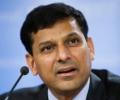
The reason behind issuing new bank licences is to allow more private sector entities to set up banks

"A time has perhaps come when we can now think of only allowing banks to acquire public deposits," Reserve Bank Deputy-Governor V Leeladhar told reporters on the sidelines of an Indian Merchants Chamber organised banking conference in Mumbai on Thursday. The number of deposit-taking NBFCs is sharply declining as also the amount of deposits with them, Leeladhar said.

IT and interest rate-sensitive bank, realty, and auto stocks ended with sharp gains.

Basel-III norms, proposed to be implemented from the beginning of 2013 till 2017, require the equity capital of a bank to be not less than 5.5 percent of risk-weighted loans, as per the draft guidelines issued by Reserve Bank of India.

The methodology will be announced later this week.
The RBI is expected to issue only a few bank licences after completing due diligence.

Rajan was speaking at a news conference.
GDP growth of 7.7 per cent in the first half of this fiscal has "left sceptics gasping and woefully behind the curve", an RBI article said on Wednesday. It also stressed the buildup in the growth momentum is likely to be sustained. The article on the state of the economy published in the Reserve Bank's December Bulletin on Wednesday also said CPI-based retail inflation is expected to ease to 4.6 per cent in the first three quarters of 2024-25 from 5.6 per cent in November.

Indian economy is gathering momentum in the second quarter, though inflation would continue to average above the central bank's comfort zone of 6 per cent, said an article in the RBI's monthly bulletin released on Thursday. The consumer price index (CPI) based retail inflation shot up significantly to 7.44 per cent in July, from 4.87 per cent in the preceding month, mainly due to soaring prices of tomato, vegetables and other food items. In his address to the nation on the Independence Day, Prime Minister Narendra Modi vowed to take more steps to contain price rise.

It may be a 'no-go' for banking licences to large industrial houses.

Former Reserve Bank Governor Raghuram Rajan said India will still remain a lower middle country if the potential growth rate remains at 6 per cent annually without any rise in population by 2047 (Amrit Kaal) and will be reaching the end of the demographic dividend by then. Speaking at a programme organised by Manthanon on Saturday, the economist said if the country does not grow faster, it will grow older (demographically) before it gets richer, which means there is the burden of an aging population to deal with also at that point. Rajan said the GDP growth in India for the past two quarters was in the region of 7.5 per cent and if one looks at the labor force participation, it is very low and when it comes to female participation, "it is the lowest in the G20".
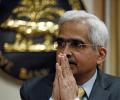
Monetary Policy Committee keeps key interest rate (repo) unchanged at 4% for 7th consecutive time; Consequently, reverse repo rate too remains unchanged at 3.35%; Bank rate also remains same at 4.25%;

In view of the economic shock caused by the COVID-19 pandemic, Reserve Bank of India (RBI) on Friday asked scheduled commercial banks and co-operative banks not to make any dividends for the financial year ended March 2020. In view of the ongoing stress and the heightened uncertainty on account of the pandemic, RBI said it is imperative that banks continue to conserve capital to support the economy and absorb losses, if any. The decision is based on review of the September quarter financial performance of banks.

In advanced economies where the financial system is more matured, the form of shadow banking is more of risk transformation through securitisation.
The panel shortlisted bank chairmen who have headed an entity for at least two years and were less than 60 years of age when the vacancy arose. The list will now be narrowed down to three candidates who will be recommended to the appointments committee of the cabinet headed by Prime Minister Manmohan Singh. Their consent will be sought before sending the list to the ACC.
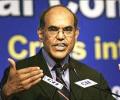
The last time RBI allowed new private banks was in 2002, prior to which it allowed new players in the mid-90s.
Analysts say the RBI could resume tightening monetary policy by early next year should inflation remain high, even as the economy is growing below the decade low of 5 percent posted in the fiscal year ending in March.
Bankers made this demand at a meeting with RBI Governor Y V Reddy, ahead of the 2007-8 monetary policy announcement on April 24.
Reserve Bank Governor Shaktikanta Das on Friday said the rupee is holding up relatively well when compared to the currencies of emerging market peers and advanced economies. Days after the domestic currency breached the 80-level against the dollar, Das said Reserve Bank of India (RBI) has zero tolerance for volatile and bumpy movement in the rupee and added that the central bank actions have helped in smoother movement. He said RBI has been supplying US dollars to the market to ensure adequate supply of liquidity and also clarified that the central bank does not target a particular level for the currency.

India's foreign exchange reserves are at an all-time high.
A top official of the Reserve Bank of India (RBI) said banks are in a better position as compared with other entities to lead the financial inclusion goal in India, though mobile companies have been allowed to partner them.

The surge is a stark turnaround from 2013 when the country's current account gap hit a record high due to outflows on expectations the US Fed would rein in its stimulus programme

RBI Governor Shaktikanta Das kept the red flag on cryptocurrencies flying, warning that the next financial crisis can be triggered by private cryptocurrencies if such speculative instruments are allowed to grow.

Reserve Bank Governor Shaktikanta Das on Wednesday said that RBI is monitoring the situation regularly with regard to the withdrawal of Rs 2,000 currency notes and expressed confidence that the entire exercise will be completed in a non-disruptive manner. The Reserve Bank of India (RBI) on Friday announced the withdrawal of Rs 2000 denomination banknotes as part of its currency management and permitted the exchange of Rs 2000 currency notes up to Rs 20,000 in one go from Tuesday onwards. The exchange or deposit window is available until September 30, 2023.

Sebi's mandate restraining mutual funds, stock brokers, and other intermediaries from associating with finfluencers who do not come under the Sebi ambit will impact the earnings of finfluencers through sponsorships, tie-ups, or referral links, as these may dry up due to the restrictions.
What's encouraging is that the process of unwinding some of the extraordinary steps taken in last July-August is continuing, so moreliberalisation is back on their agenda.

The Reserve Bank of India on Friday slashed the growth projection to 7 per cent for the current fiscal from the earlier forecast of 7.2 per cent, citing aggressive tightening of monetary policies globally and moderation in demand. Unveiling the fifth monetary policy for this fiscal, RBI Governor Shaktikanta Das said the central bank remains committed to price stability to put the country on the sustained path of growth.

A RBI constituted panel on financial inclusion headed by Nachiket Mor had recommended the setting up of the payments banks in order to deepen access to finance.

The post of chairman and managing director has been split and the government has appointed managing directors and chief executive officers in four banks -- Indian Overseas Bank, United Bank of India, Oriental Bank of Commerce and Vijaya Bank.
Bank chiefs told the RBI said they needed to mobilise deposits as they were facing additional demand for funds with other sources drying up. "When government schemes are offering 8 per cent rate, banks cannot go below that. If we cut rates further, we will not be able to attract fresh funds and will also face the prospects of depositors exiting in favour of small savings instruments," said a banker who attended the meeting.

It is only after the government's nod that a particular design change come into effect.

The Reserve Bank of India wants more and more banks to launch services on mobile, its Deputy Governor Shyamala Gopinath said in Bengaluru on Monday.
Outgoing Reserve Bank of India Governor Bimal Jalan talks about market realities like fall of gilt yields and the importance of creating investment fluctuation reserves by banks.
Indian economic growth hit a low of five per cent in the financial year ended March 31,2013 and further slowed in the first quarter of FY14.

A top-class board is important from a systemic point of view, more so at a time when the wider financial world and India Inc is chasing the same talent as banks.
The IPO scam came to light in 2005 when the private 'Yes Bank' launched its initial public offer, which saw one Roopalben Panchal of Ahmedabad opening multiple fake demat accounts.

Breaking silence over the Rs 12,967 crore scam at Punjab National Bank, he said: "I have chosen to speak today to convey that we at the Reserve Bank of India also feel the anger, hurt and pain at the banking sector frauds and irregularities."
Bankers have read the Reserve Bank of India's (RBI) comments on foreign banks' market share in India as an indication that the promised review of policies on the presence of overseas banks in 2009 is unlikely to yield any greater leeway within which they can operate.
